PR’s “Hidden Figures”

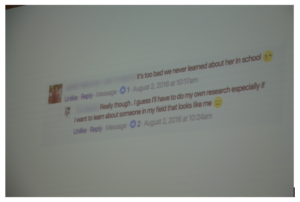
It was those comments above by two African-American girls from a college in Pennsylvania, both PR majors, that prompted Baruch College professor and the founder of the Museum of Public Relations Shelley Spector to do something about it.

“That just blew me away because that was just the kind of peephole into these students’ lives and that’s how they feel. I am also a professor of history and I know that these textbooks don’t include any African-American PR professionals. I had to do something about it,” said Spector.

Thursday, Feb. 6, 2017 was Historic and Powerful. When we think of Black History we often forget the communications field and in particular, the Public Relations profession. As an aspiring PR Pro at the time, I often wondered where our place was in the history of this profession. In our classes and our textbooks, we often learn about Bernays, Lee and not about Inez Kaiser, Ofield Dukes, and Pat Tobin to name a few.

These three individuals thrived in an era where they were segregated due to the color of their skin and had to be three times better than their counterparts just to get half of what they got.

For professional in residence at the University of Florida College of Journalism and Communications Patrick Ford, the event was bigger than just PR.

“When I think about great communicators and great persuaders in American history, it’s way beyond just one industry. I think of Frederick Douglass, Martin Luther King, Mya Angelou, and Barack Obama,” said Ford.

During the event, some of PR’s “Hidden Figures” Ms. Inez Kaizer and Mr. Ofield Dukes were honored. For Rick Kaizer, the son of Inez Kaizer, the night was special.

“Being A woman and Being a woman of color, she faced a lot of obstacles, but she was the kind of person that never took no for an answer. That was always a beginning point for her to make something happen. The fact that she is being honored tonight is very special to me and the family,” said Kaizer.

For Roxy Victorian, the daughter of Ofield Dukes, this night was inspiring.

“My dad loved unconditionally. He was passionate about Public Relations, social justice, Civil
Rights, academics and providing an alternative to negative stereotypes and images presented within the African-American community,” Said Victorian.
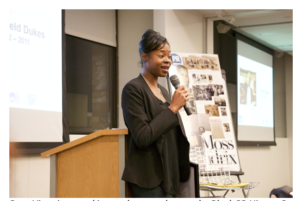
Roxy Victorian speaking to the attendees at the Black PR History Panel on Thursday, Feb. 6, 2017, in Edelman’s New York City office.

If anything, this night was a reminder that we belong and we are just as valuable to the profession just like our counterparts. We matter.

To say that this was overdue is an understatement, however, I am thankful that The Museum of Public Relations brought to light for all Black & Brown kids studying PR, our Heroes.

If anything, the event amid the snowstorm metaphorically represents the ability that we as African-Americans have to continuously overcome any obstacles thrown our way.

Some worried that this was going to be a “One & Done” However, the museum has since decided to make this an annual event.

In summary, after hearing the panel speak from Dr. Denise Hill to my program director at the time, Dr. Rochelle Ford. I knew that we were in great hands and it’s on us to keep the legacy of these “Hidden Figures” alive and well.
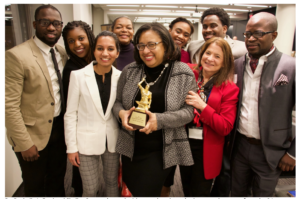
Dr. Rochelle L. Ford and Shelley Spector (center) with several students, both past and present, from the S.I. Newhouse School of Public Communications at Syracuse University on Thursday, Feb. 6, 2017, in Edelman’s New York City office.
Photo credit: Barry Spector/Museum of Public Relations

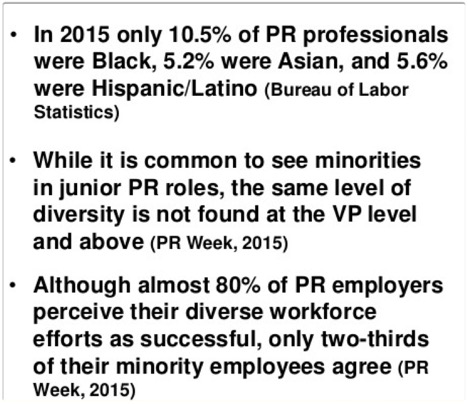
Managing Diversity witihn Public Relations

In the age of hyper-connectivity in part due to social media, society, otherwise known as public, has essentially leveled the playing field with organizations. Gone are the days when an organization can neglect the concerns of their respective publics. Yet, the Public relations practice is strongly driven by perspectives. Over the years, organizations have failed to successfully satisfy their respective publics in part because of one-way of thought. Through diversity or the lack thereof, not just only from a physical sense, but from a thought and authority perspective, it impacts organizations both internally and externally.

picture5

Below are the three trends I developed upon completing my research.

Trend 1: Intersectionality
Organizations fail to understand that you cannot just treat race and gender as their own. That there is an overlap between identities.” (Vardeman-Winter, J., 2011). Public Relations professionals must strive to create campaigns that are not solely one size fits all. (Vardeman-Winter, J., 2011). Internally, it is a difference between one gender thriving over another regardless of how many, or how little they may be. (Bardhan, N., 2013).

Trend 2: Equity
Internally, organizations need to create an environment in which people of diverse backgrounds have an equal opportunity to influence the decisions that are being made. (Choi, S., & Rainey, H. G., 2014). By establishing equity, an organization can extend their reach to new markets and can maintain positive relationships with their current publics, from an external point of view.

Trend 3: Inclusion
It’s one thing to have a diverse work environment that is reflective of our extremely diverse society, but what are organizations doing to incorporate these individuals. What internally is being provided to comfort these individuals emotionally. (Choi, S., & Rainey, H. G. 2014). Professionally, what is being done to help retain and grow diverse talent. Externally are organizations advocating on issues that isn’t commonly associated with them. (Logan, N., 2016).

picture4Theories & Research Methods

  • Religion
  • Gender & Race
  • Agenda Setting Theory
  • Framing
  • Qualitative & Quantative


Case Study: IBM’s “Hack A Hair Dryer” Campaign

picture6IBM is short for International Business Machines. They are a computer hardware company headquartered in Armonk, New York. Generally speaking, there has been a huge push by the country to address STEM, short for Science Technology, Engineering, and math. “According to the U.S. Department of Labor, only 5% of U.S. workers are employed in fields related to science and engineering, yet they are responsible for more than 50% of our sustained economic expansion.” (Adkins 2012)


In response to such alarming statistics, many organizations and the country as pushed for many STEM programs within schools. Outside of STEM, IBM is a part of “Silicon Valley” which is a nickname of the southern portion of the San Francisco Bay Area and home to many tech organizations such as Apple and Google. However, in recent years, there has been a discussion on addressing diversity within Silicon Valley. Data shows that Silicon Valley consists of predominately white males 71% to be exact. On the other hand, 29% of employees are women.

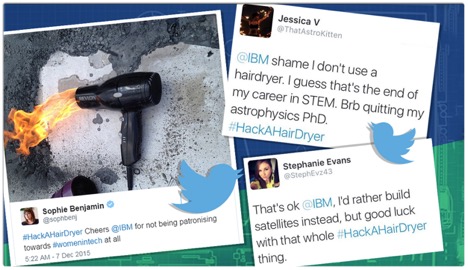
In response to the problem addressed many companies have created campaigns/initiatives to address such issue. Unfortunately, not all have been effective in their messaging IBM being one of them. In 2015, to encourage women both young and old to peruse a career in coding and to change the perception of women in tech. The campaign was titled “#HackAHairDryer” IBM created a video that was focused on hair dryers and girls using hair dryers for their science projects

As expected it failed. It failed for the simple fact that it stereotyped and pigeon-hole women into traditional gender stereotypes. The public had a field day with IBM in particular women within STEM fields. “I code. But it’s to mess around with salamander DNA sequences, not hairdryers,” said Cathy Newman, a biology Ph.D. student.

picture7

After enough backlash from the public, IBM offered a public apology and within two months took down the promotional video and ended the campaign.

Why Diversity ?

  • Multiple viewpoints
  • Better understanding customers
  • Enhancing client connections
  • Delivering insights into trends picture3

In summary, as our world grows so will issues surrounding diversity if it is not addressed accordingly. We are at a point where publics can no longer be ignored. They have the ability to cause havoc within a matter of seconds as a result of social media.

Also, diversity is more than just having a physical representation of diverse employees within the workplace. There must be programs and resources put in place to make them feel included in the overall function of a business. Also, growth, when diverse candidates enter your organization what are you putting in place to make sure that they can grow and develop to become potential VP and above and not remain as juniors forever.

Secondly when creating campaigns for diverse audiences, one must avoid having a one size fits all approach towards campaign execution. Not all audiences are the same. Factors such as race, gender, sexuality, location, religious beliefs, etc. all play a role in one’s identity.

picture1

“Strength lies in differences, not in similarities”

-Stephen R. Covey


First Amendment & PR

The First Amendment according to kids.laws.com, “makes it illegal to make a law that establishes a religion, stops the freedom of speech, stops people from practicing their religion, stops the press from printing what they want, and stops people from exercising their right to assemble peacefully or demonstrating against the government.” It is a vital part of our constitution and the reason why we are able to live as free as we currently do.

For PR practitioners, the First Amendment is probably the most important law to the profession. To be more specific, the key aspect of this amendment is freedom of speech. Freedom of speech— although we may not always say the right things, yes I am talking to you Donald Trump— allows for us to be as expressive as possible. In a profession that demands us to bring facts and objectivity to decision-making, it is important that we have the freedom to communicate as openly as possible. We may not say what’s pleasant to our respective organizations, but we, under freedom of speech, can say what is needed for our organization to grow.

Freedom of speech allows for practitioners to create campaigns that will enhance relationships with current and potentially new publics. On the other hand, freedom of speech means publics too can have a say on the clients we represent. If our clients are doing a good job with adhering to their publics needs, then freedom of speech works in their favor. However, if they are not, it can potentially be the downfall of an organization’s brand.

During times of crisis, some companies already have a hard time with telling the truth and admitting their mistakes. Without freedom of speech, we would have no way to get organizations to commit towards transparency.
 

In summary, without freedom of speech, could PR pros still do their jobs effectively and most importantly, could they still do their jobs ethically?


Link to breakdown of the First Amendment:

http://kids.laws.com/first-amendment

Ethics

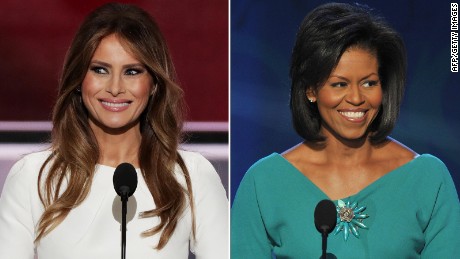
The huge elephant in the room, or in this case, the country is ethics. Between the surprising presidential run of Donald Trump, his wife Melania Trump, or in this case, Michelle Obama— I admit, her speech made it hard to distinct the two— and his supporters. I wonder if we still have any.

Melania Trump and Michelle Obama


On a serious note, ethics is an extremely important concept within the PR practice. It is so important that the Public Relations Society of America established a code of ethics, that set a standard for ethical behavior and proper trust building. Within the PRSA’s code of ethics, there are six key provisions and they are as follows, free flow
of information, competition, disclosure of information, safeguarding confidences, conflicts of interest and enhancing the profession.

Provision one —free flow of information— stresses the importance of not shielding any information whether it is good, or bad from the public. Provision two—competition— expresses that individuals shouldn’t tamper with their competition. That competition should be fair. Provision three— disclosure of information— advocates for individuals having the right to have access to all information needed to make well-informed decisions. Provision four— safeguarding confidences— seeks to make sure that all private and personal information is protected. Provision five— conflicts of interest— stresses that practitioners much act solely in the interest of their client and employer. Lastly, provision six— enhancing the profession—tasks practitioners to improve, build and maintain respect for the PR profession through their work.

The provision that interests me the most is the disclosure of information. Many organizations have a hard time with this particular provision. Not just during situations of crisis, but in general. Part of what makes organizations thrive is the fact that their publics aren’t informed well enough on how they operate. I don’t believe that ethics are practiced to the fullest extent within most organizations. There is a lot of shadiness that goes on behind the scenes and until it affects profit, you will never see the proper disclosure of information.

It is part of the reason why publics have a hard time trusting organizations. As PR practitioners, this makes our job of being transparent within our messaging difficult and it is a topic that we sadly have to tread lightly. We may act ethically while in our organizations, but in the process, we will continue to wonder to what extent.

Link to Melania Trump’s speech:

https://www.youtube.com/watch?v=RcbiGsDMmCM

Link to PRSA’s member code of ethics:

https://www.prsa.org/aboutprsa/ethics/codeenglish#Competition


Important periods within PR

Week two in professor D’Angelo’s class brought the PR industry to our attention. Although the practice is relatively new when compared to other professions, recent trends show that there is a growing demand for PR professionals in the workplace.

This trend is the byproduct of advancements in human methods to communicate. Thirty years ago, companies had strict control of both their messaging and their brand. Now with social media, brands can no longer rest on their laurels. Publics now have greater ability to impact the perception of a company’s brand. In some ways, social media has expedited how companies and organizations react to their publics.

Vietnam Protesters

It makes you wonder, what if social media existed during the period of protest and empowerment—1965-1985 — A period that was important to the development of PR. From African-Americans down to college students, America was fed up with the “establishment.” It was like the kid who finally stood up to the bully.

This period was the public’s dream and the establishment’s nightmare. On the publics end, it was the realization that they could be the change

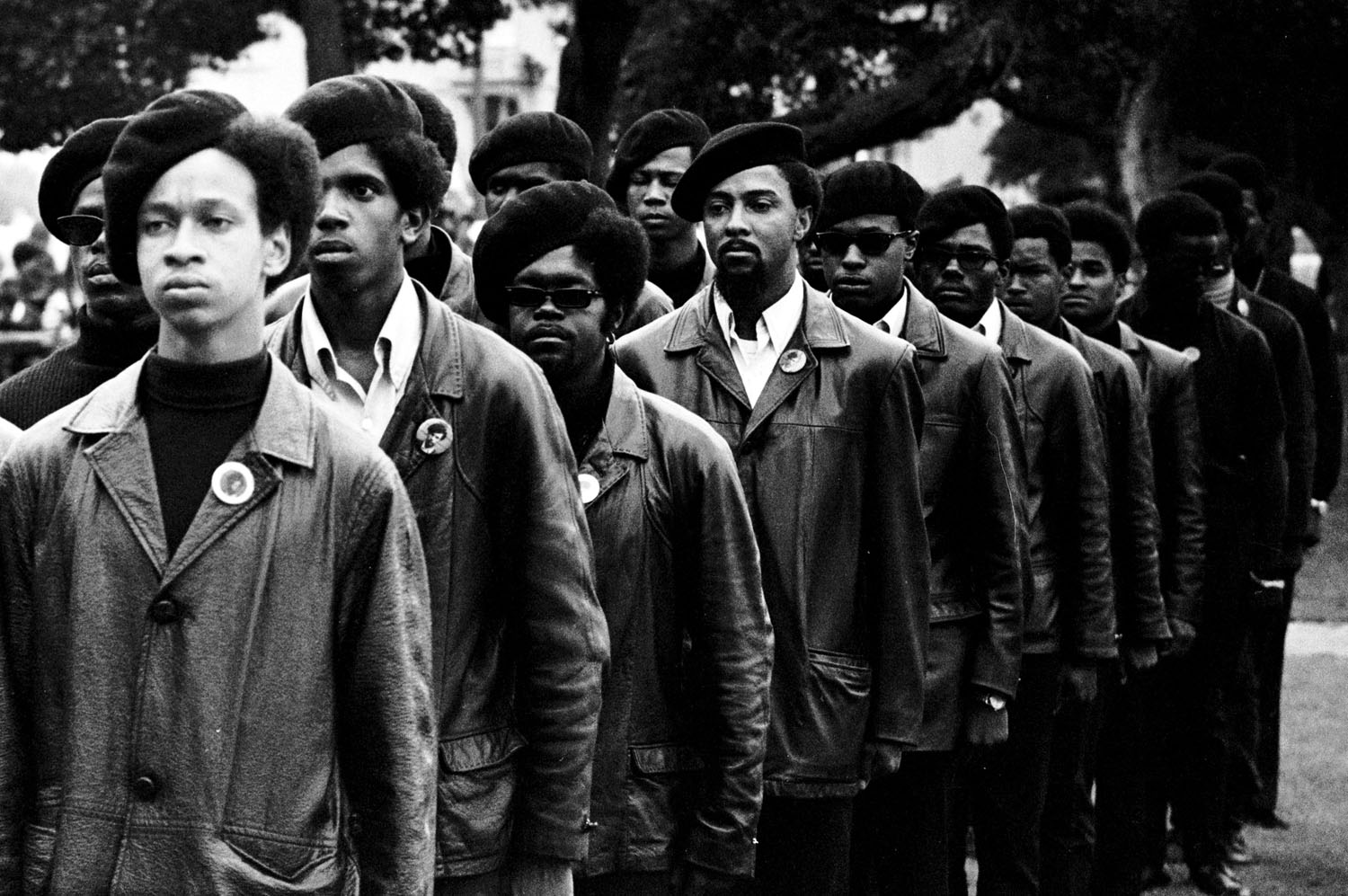
The Black Panther Party

they wanted to see if they strategically mobilized. Leaders such as Dr. King and advocacy groups such as the Black Panther Party are examples of both leaders and groups that rose to prominence during this era. On the establishments end, the control that they once fought to have over their publics quickly evaporated.

From a PR standpoint, this period was known as the “mutual adjustment era.” The establishment had to directly respond to the issues, marking the start of increased corporate social responsibility efforts. On the publics end, this was a period of information and transparency. As Dr. King states, “Public Relations is a very necessary part of any protest of civil disobedience”

In retrospect, the period of protest and empowerment has been a source of influence for various other protests and consumers some examples include #BlackLivesMatter movement and HeForShe movement.

HeForShe poster

It is great to see the balance of power in regards to company perception. The actions of organizations now more than ever have to match their words. In the long run, this added pressure will make for better relations between organizations and their publics.

BLM Protesters


About the Black Panther Party:

https://www.youtube.com/watch?v=Tlw_Kp0By10